How does a Septic Tank Drain field work?
A septic tank drain field is a critical part of any septic system, responsible for the final stage of wastewater treatment before water is safely returned to the environment. While the septic tank handles solid waste separation, the drain field manages the filtration and absorption of liquid waste through the soil.
Understanding how a septic tank drain field works can help homeowners identify problems early, protect their system, and avoid costly repairs or system failure.
Understanding the Role of a Septic Tank Drain Field
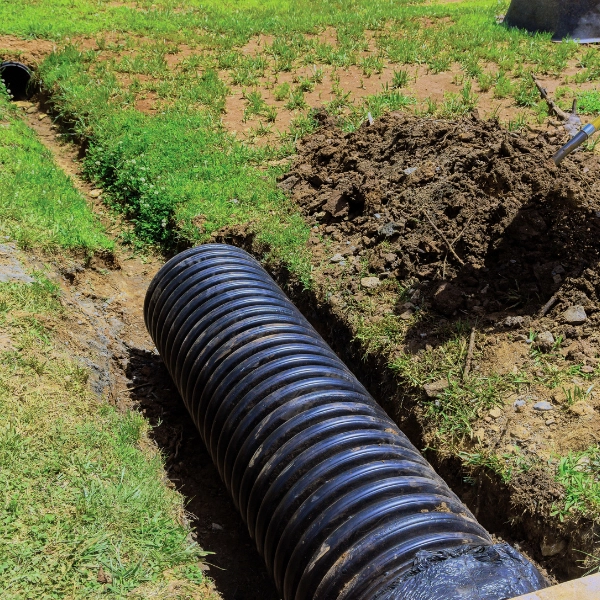
A septic tank drain field, also commonly called a drain field or leach field, is designed to treat and disperse wastewater after it leaves the septic tank. Together, the septic tank and drain field form a complete septic system.
The septic tank collects sewage from the home and separates solids from liquids. Once solids settle at the bottom of the tank, the remaining liquid waste flows out into the drain field. This process highlights the difference in function between a drain field and a septic tank: the tank stores and separates waste, while the drain field treats and disperses it.
The drain field allows wastewater to be naturally filtered through soil, removing harmful bacteria, nutrients, and contaminants before the water reaches groundwater sources.
How a Septic Tank Drain Field Treats Wastewater
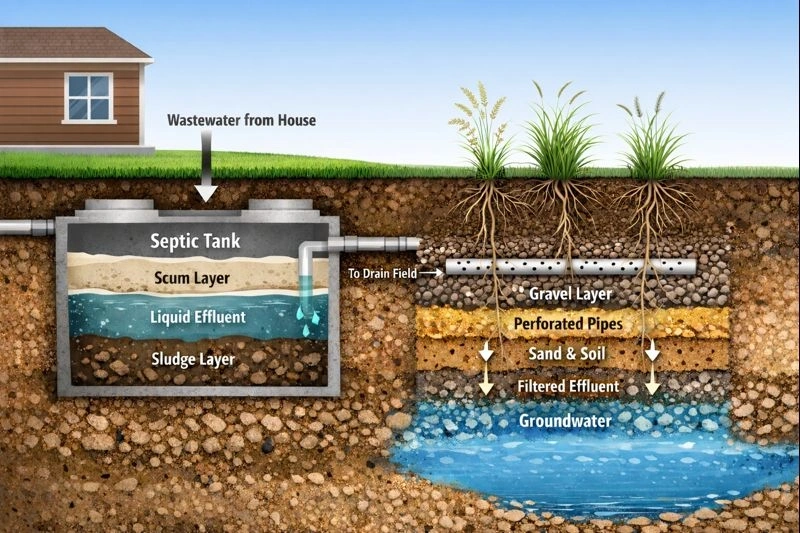
Once wastewater exits the septic tank, it enters the septic drain through a series of perforated pipes laid in shallow trenches. These pipes evenly distribute the liquid waste across the drain field area.
As wastewater slowly seeps into the surrounding soil, wastewater treatment begins. Soil particles filter contaminants while beneficial bacteria break down pathogens and organic matter. This natural sewage treatment process ensures that water returning to the environment is safe.
The effectiveness of this system depends heavily on soil conditions and the volume of wastewater produced by the household. Excessive water usage can overwhelm the drain field, reducing its ability to absorb and treat wastewater efficiently.
What Makes Up a Septic Drain Field System
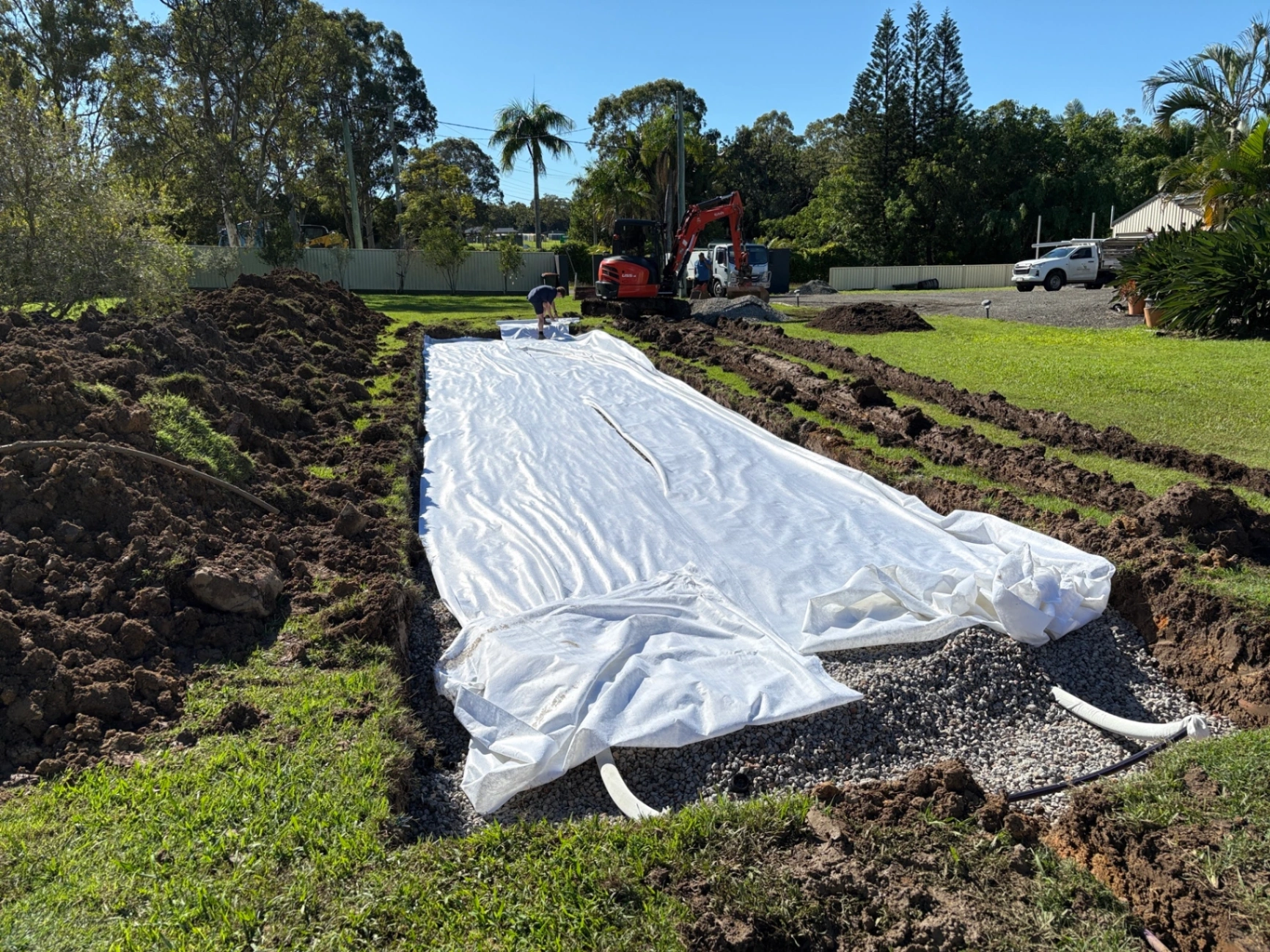
A septic drain field system is made up of several key components that work together to manage wastewater safely:
- Perforated pipes that distribute liquid waste evenly
- Gravel or aggregate layers that support drainage
- Natural soil that filters contaminants
- A connection to the treatment tank (septic tank)
In some cases, alternative systems may be used. Sand filter systems or sand filter designs are often installed in areas with poor soil conditions. These systems pre-treat wastewater before it reaches the drain field.
More advanced setups may include a wetland cell, which mimics natural wetlands to further improve filtration. These options are typically used when conventional systems are unsuitable due to soil conditions or site limitations.
How Long a Septic Tank Drain Field Typically Lasts
A well-designed and properly maintained septic tank drain field can last 20 to 30 years or more. Longevity depends on several factors, including:
- Soil conditions and drainage capability
- The quality of the original septic tank drain field installation
- Daily water usage habits
- Regular septic tank pumping and maintenance
Poor soil conditions or excessive sewage flow can shorten the lifespan of the drain field. Performing a percolation test before installation helps determine whether the soil can adequately absorb wastewater and supports long-term system performance.
What Is a Percolation Test and Why Is It Important?
A percolation test (often called a perc test) is a soil evaluation used to measure how quickly water drains through the ground. It is a critical step in determining whether soil conditions are suitable for a septic system, particularly the septic tank drain field.
During a percolation test, small holes are dug in the proposed drain field area and filled with water. The rate at which the water is absorbed into the soil is then measured over a set period of time. This absorption rate indicates how effectively the soil can filter and disperse wastewater.
Soil that drains too slowly may lead to pooling, sewage backup, or leach field failure, while soil that drains too quickly may not adequately filter contaminants before wastewater reaches groundwater. The results of a percolation test help determine:
- Whether a septic system is viable for the site
- The required size of the septic tank drain field
- The most suitable septic tank drain field layout
- Whether alternative systems, such as sand filter systems,s are required
By identifying soil limitations early, a percolation test supports proper septic tank drain field installation and helps prevent premature system failure. A percolation test plays a key role in determining whether the soil can support a septic system by ensuring wastewater can be absorbed and treated safely without overwhelming the septic tank drain field.
Common Septic Tank Drain Field Issues
Several issues can affect the performance of a septic tank drain field over time. Common problems include:
- Slow drains inside the home
- Standing water above the drain field
- Unpleasant sewage odours
- Lush grass growth over the leach drains
- Sewage backup into plumbing fixtures
These issues often indicate clogs, oversaturation, or developing structural damage. Left untreated, they can lead to leach field failure, requiring extensive repair or replacement. To learn more about the signs of Septic System Failure, read our infopage about the 8 Signs Your Septic System is Failing.
Signs of Septic Tank Drain Field Failure
Recognising the early signs of leach field failure can prevent serious damage and health risks. Warning signs include:
- Persistent sewage smells outdoors
- Wet or spongy soil around the drain field
- Slow drainage throughout the house
- Sewage backup in sinks, toilets, or showers
- Visible wastewater pooling at the surface
Drain field failure is often caused by excessive water usage, soil compaction, or long-term neglect. Early intervention can reduce the overall septic tank drain field repair cost.
How to Protect and Maintain a Septic Tank Drain Field
Proper septic tank drain field maintenance is essential for system longevity and performance. Regular septic tank pumping prevents solids from entering the drain field and clogging the system.
Additional best practices include:
- Monitor household water usage to avoid overloading the system
- Avoid flushing non-biodegradable items or grease
- Keep heavy vehicles off the drain field area
- Ensure proper grading to divert surface water away
- Schedule routine septic tank drain field cleaning if recommended
Meeting your septic system needs through consistent maintenance helps prevent costly failures and extends the life of both the tank and the drain field. Learn more on our info page guiding home owners how to maintain a healthy septic system.
Factors That Can Damage a Septic Tank Drain Field
When damage occurs in the drain field, it often places strain on the wider septic system, increasing the risk of long-term failures, sewage backup, and costly repairs.
Several environmental and behavioural factors can damage a septic tank drain field, including:
- Poor soil conditions that limit absorption
- Compacted soil from vehicles or construction
- Excessive sewage flow from high water usage
- Tree root intrusion into leach drains
- Inadequate residential septic tank drain field layout
An undersized or poorly planned septic tank drain field layout may not handle household demand efficiently. A well-designed residential septic tank drain field layout ensures proper spacing, depth, and drainage capacity for long-term performance.
Professional assessment during septic tank drain field installation is critical to avoid premature system failure and unnecessary repair costs. Reach out to our team today at 0488843272 to get advice on your next Septic System, or book online.